Thursday, March 12, 2015
3/12/15
Today in class we started on our power points. My group is doing a power point on homer. We got a couple slides done today. We have to have atleast 18 slides in our power point. We also talked about what we are going to do when Mr.Schick isn't here. We are either going to watch a video or work on our paper.

Wednesday, March 11, 2015
3/11/15
Today in class we took 10 minutes to review over the Ancient Greece power point. Then we took a pop quiz on it. We had to answer 10 questions and we got 10 sec to answer them. I thought that the quiz was really easy and then I ended up getting a 100. After the quiz we talked about our upcoming project. We have to make a power point and a 1000 word essay on our topic. My group is Evan and Steven. We have to do our project on the life and writings of Homer.
Tuesday, March 10, 2015
3/10/15
Here are more notes on Ancient Greece:
Ionian Sea - South of the Adriatic Sea
Fertile valleys cover one quarter of the peninsula, only 20% arable
Greek diet consists of grains, grapes, and olives
Lack of resources most likely led to Greek colonization.
Temperatures usually ranged from mid 40s in winter to low 80s in summer.
Mycenaean
Mycenae is located on a rocky ridge and protected by a 20ft brick wall.
Mycenae kings dominated Greece from 1600-1200 BC
- controlled trade in the region
1400 BC - Mycenaean's invaded Crete and absorbed Minoan culture and language.
1200 BCE- mysterious "sea people" invaded Mycenae and burnt many palaces (the sea people also invaded Egypt)
Dorian's
where far less advanced
the trade based economy collapsed
writing disappeared for 400 years
Homer
Greek oral tradition - stories past on by word of mouth
Homer lived at the end of the "Greek Dark Ages"
He composed stories of the Trojan War 750-700 BC
The lliad - probably one of the last conquest of the Mycenaeans ( the Trojan War)
The Odyssey- Odysseus attempt to return home, being thwarted by the angry god of the sea, Poseidon (won a war, was trying to get home to his son and wife)
The Odyssey is 12,110 lines of rhyme
The Odyssey- Odysseus attempt to return home, being thwarted by the angry god of the sea, Poseidon (won a war, was trying to get home to his son and wife)
The Odyssey is 12,110 lines of rhyme
Friday, March 6, 2015
Cyber Day 5
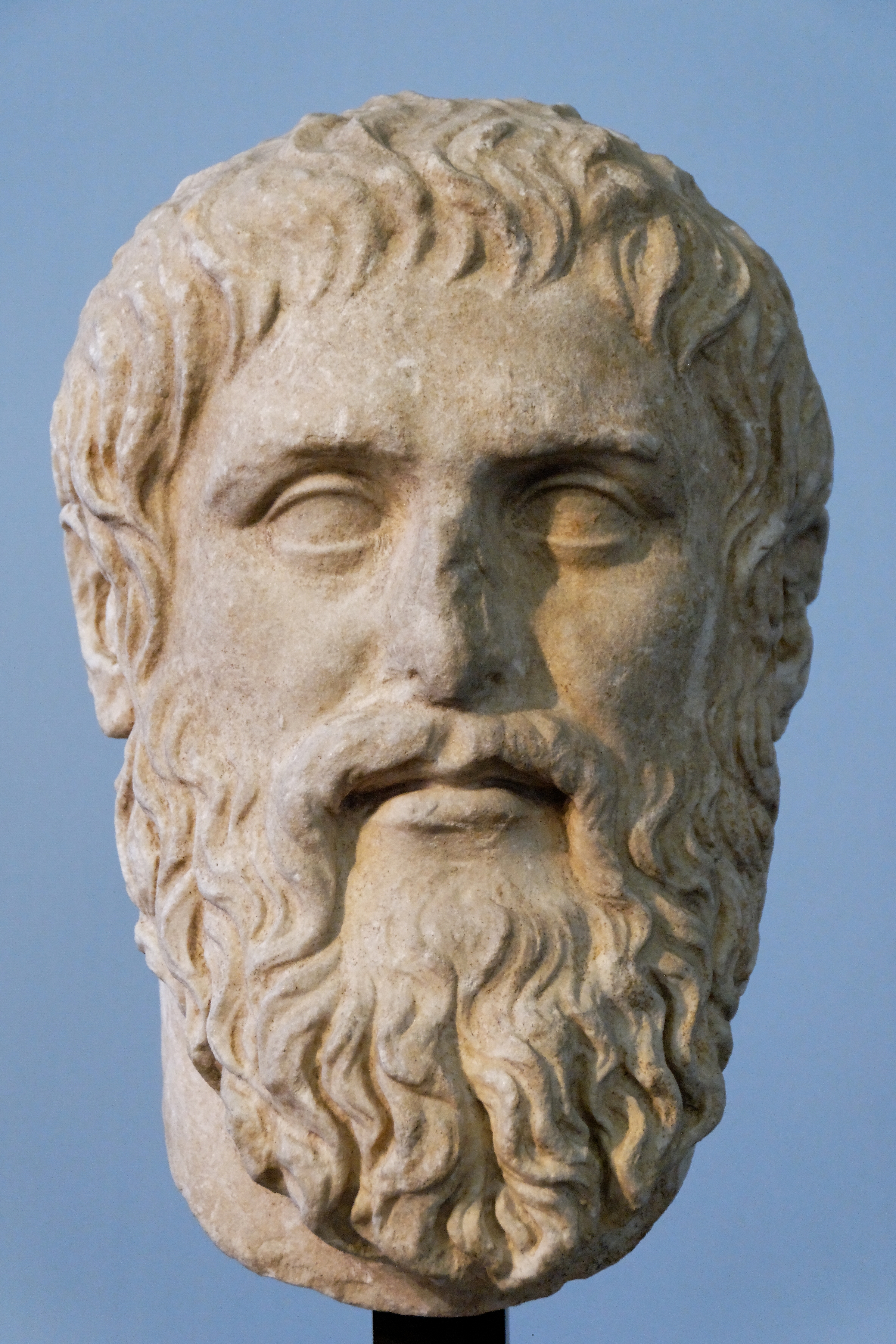
Plato
Plato was born somewhere between 428-427 BC in Athens and died somewhere between 348-347 BC in Athens. Plato was no only a Greek philosopher but also a Greek mathematician. Plato was influenced/taught by Socrates and Pythagoras. Plato was a superb writer and wrote many dialogues. In his dialogues he conveyed and expanded on the ides of Socrates. Plato influenced most of western philosophy that came after him.
Thursday, March 5, 2015
Cyber Day
Ancient Greek Architecture
The Parthenon
The Parthenon was built in 447-432 B.C.
It was built on the Acropolis.
The Parthenon is a Doric design with lonic features.
It is made of ivory and gold.
The Parthenon has a statue of Athena in golden armor.

The Theatre of Dionysus
The Theatre of Dionysus was built in the 4th century B.C.
It was built on the South slope of the Athenian Acropolis.
It was made of stone.
The shape of a semi-circle.

The Temple of Aphaea
The temple was built around 500-480 B.C.
It is on the Greek island of Aigina
Built of limestone
Dedicated to the goddess Aphaea

The Parthenon
The Parthenon was built in 447-432 B.C.
It was built on the Acropolis.
The Parthenon is a Doric design with lonic features.
It is made of ivory and gold.
The Parthenon has a statue of Athena in golden armor.
The Theatre of Dionysus
The Theatre of Dionysus was built in the 4th century B.C.
It was built on the South slope of the Athenian Acropolis.
It was made of stone.
The shape of a semi-circle.
The Temple of Aphaea
The temple was built around 500-480 B.C.
It is on the Greek island of Aigina
Built of limestone
Dedicated to the goddess Aphaea
Wednesday, March 4, 2015
3/4/15
Today in West Civ class we talked about up coming Cyber Day assignments that we were probably going to have in the up coming snow days. It is supposed to snow tomorrow and we most likely wont have school tomorrow and Friday. Im looking forward to it snowing a lot and cant wait to get out of school for awhile. The only problem is that I have to shovel my drive way and a lot of snow makes it harder.
Tuesday, March 3, 2015
3/3/15
Today in West Civ we started to talk about Ancient Greece. Here are the notes I took today:
The greatest civilizations in the world were all on rivers:


The greatest civilizations in the world were all on rivers:
- Mesopotamia - Tigris and Euphrates Rivers
- Egypt - The Nile
- India - The Indus River
- China - Huang He River
Location and Geography
- By the Mediterranean Sea which means middle of the Earth
- Made up of more than 1400 islands
- Topography - Very Mountainous
- Peninsula
- They have the Adriatic Sea to the West and the Aegean sea to the East
- Crete is a big island off the south coast of Greece
Mr. Schick showed us 2 maps in class. Here they are:
Subscribe to:
Posts (Atom)